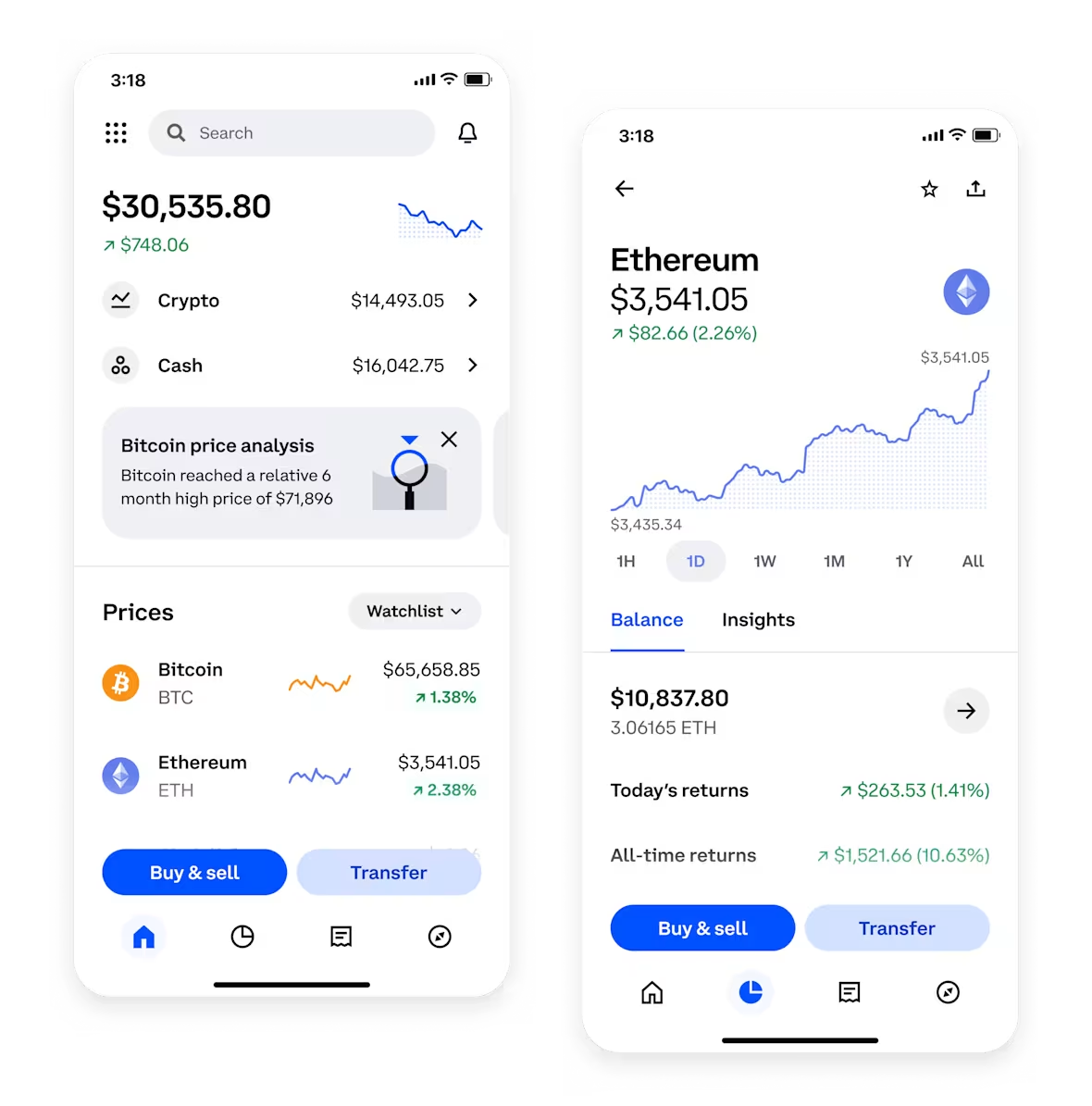
Navigating the world of cryptocurrency trading often involves using multiple platforms. For traders who want to take advantage of different features, liquidity pools, or fee structures, understanding how to operate both Binance and another exchange (such as Coinbase, Kraken, or Bybit) is essential. This guide provides a clear, practical walkthrough of the key steps involved in managing accounts and transferring assets between two exchanges effectively.
Step 1: Register and Secure Both Accounts
The first step is to create verified accounts on Binance and your chosen exchange. Ensure you complete the Know Your Customer (KYC) process on both platforms, as unverified accounts often have strict withdrawal limits. For security, enable Two-Factor Authentication (2FA) using an authenticator app (like Google Authenticator) on both exchanges. Never use SMS-based 2FA if possible, as it is more vulnerable to SIM-swapping attacks.
Step 2: Understand the Wallet Structure
Binance has a unified wallet system that includes Funding, Spot, and Margin wallets. Your selected second exchange might have a similar structure. Before any operation, you must locate the correct wallet. For transfers, always use the "Spot Wallet" or "Funding Wallet" for stablecoins and major coins. Avoid sending tokens to the wrong wallet type, as this can cause permanent loss.
Step 3: Obtaining the Deposit Address on the Destination Exchange
To move assets from Binance to your other exchange, you first need the deposit address on the destination platform. Log into your second exchange, navigate to "Deposit" or "Receive," and select the specific cryptocurrency (e.g., USDT, BTC, or ETH). Crucially, you must copy both the wallet address and the selected network (e.g., BEP20, ERC20, or TRC20). A common mistake is choosing a different network (e.g., sending via BEP20 when the destination exchange only supports ERC20), which will result in lost funds.
Step 4: Initiating the Withdrawal from Binance
On Binance, go to your "Wallet" and click "Withdraw." Paste the address you copied from the destination exchange. Now, select the exact same network that you chose on the destination exchange. Double-check the network compatibility: if both sides show BEP20 (Binance Smart Chain), you are safe. Enter the amount. Binance will display the withdrawal fee and the final amount received. Proceed with the withdrawal and confirm via your 2FA and email.
Step 5: Operating the Trade on the Target Exchange
Once the funds arrive (which can take seconds to minutes depending on network congestion), you can operate on your second exchange. For example, if you moved USDT to Coinbase, you can now buy other altcoins, stake your assets, or take advantage of a lower trading fee pair. If your goal is arbitrage, monitor the price difference live. The core operation here is simply using the second exchange's trading interface just as you would on Binance, but with potentially different order types or liquidity depths.
Step 6: Reverse Operations and Portfolio Rebalancing
The process is entirely reversible. When you want to move funds back to Binance, simply reverse the steps: copy your Binance deposit address (for the specific asset and network) and initiate a withdrawal from your second exchange. Many traders use this "two-exchange" method to rebalance their portfolio, lock in profits, or access unique staking opportunities unavailable on a single platform.
Critical Risk Management Consideration
Always test a small amount first. Before sending a large sum (e.g., 1 BTC), send a tiny test transaction (e.g., $5 worth). This confirms that the address and network are correctly configured. Additionally, be aware of the minimum withdrawal limits. Binance and other exchanges often have set minimums, and sending a value below that threshold will cause the transaction to be rejected or lost.
By following this systematic approach—focusing on wallet selection, network matching, and security verification—you can smoothly operate between Binance and another exchange. This dual-exchange strategy enhances your flexibility, allowing you to access the best trading pairs, lower fees, and improved liquidity across the crypto ecosystem.